A two-day interviewing method

Get to the truth without breaking the person.

SAFER is a five-part method for interviewing sex offenders using strategic, empathy-based techniques. It builds the conditions where a person will talk, holds accountability without humiliation, and confirms an accurate account in their own words.
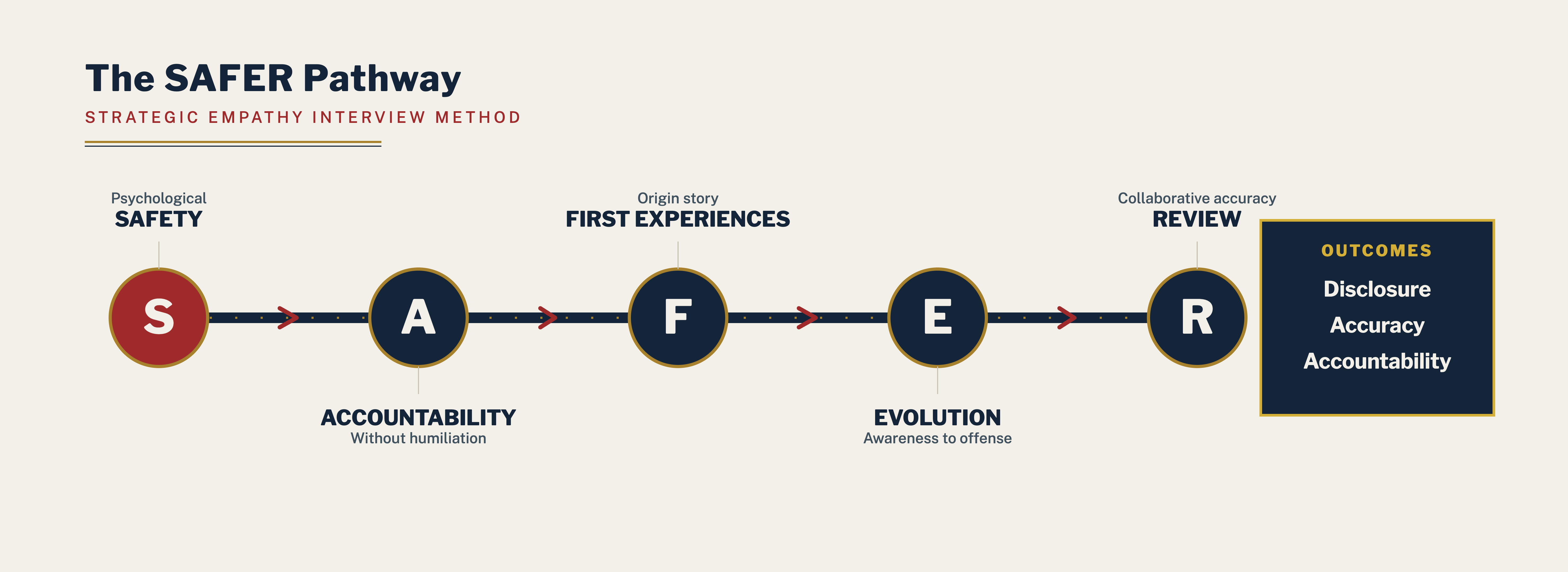
The SAFER pathway: Safety, Accountability, First Experiences, Evolution, Review, leading to an accurate account.

What SAFER is

Method, not pressure.

Rapport beats coercion for accurate information. SAFER turns that finding into a repeatable process any investigator, corrections officer, or supervisor can use. It rests on established research: procedural justice, rapport-based interviewing, and the cognitive interview.

01

Built on safety

People disclose to a person, not to a procedure. Safety is the on-ramp to the truth.

02

Accountable, not cruel

Understanding a person is never the same as excusing what they did. Humiliation produces denial; respect produces disclosure.

03

Accurate by design

The account is reviewed together and confirmed in the person's own words.

The hidden story

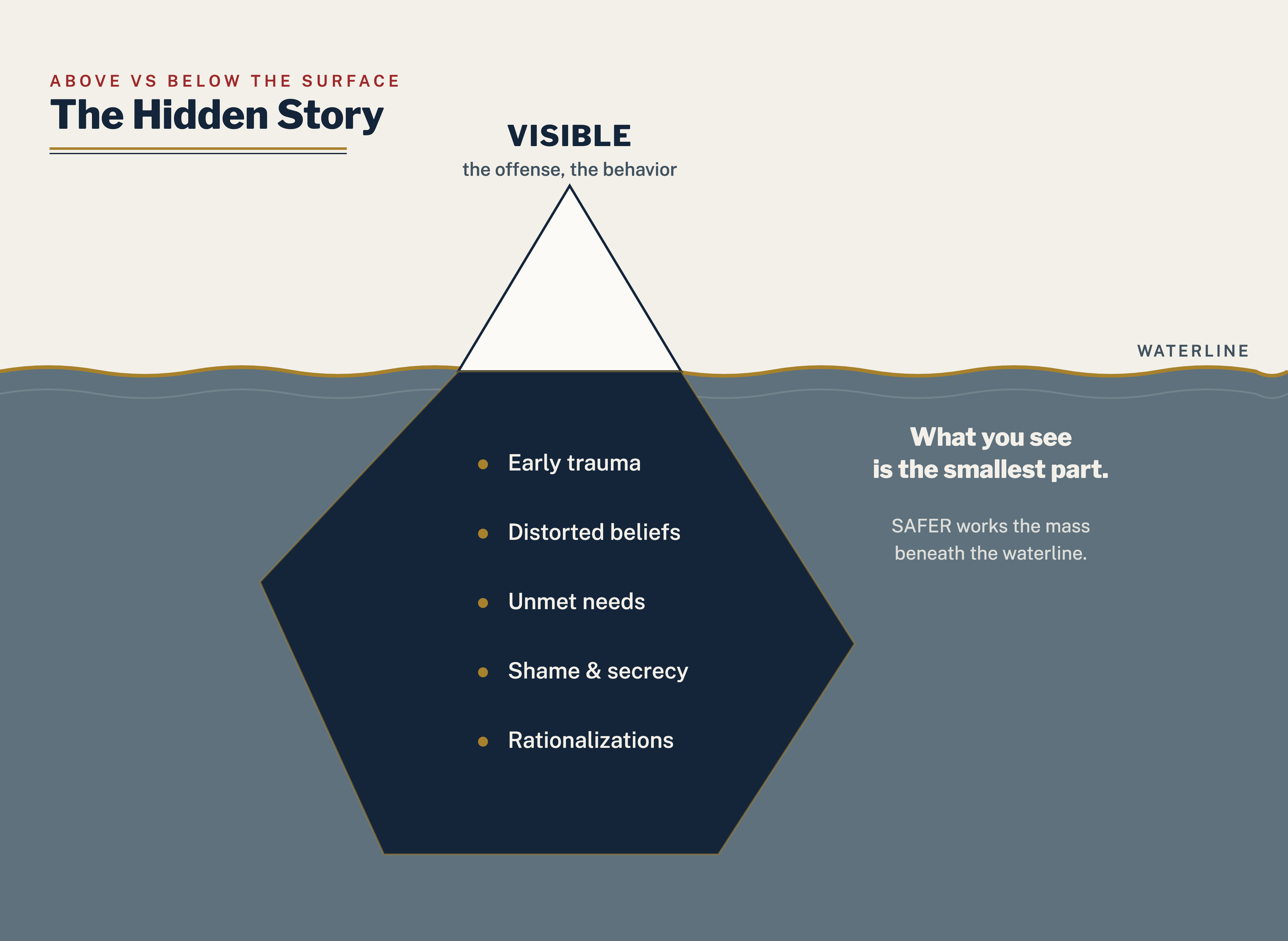
The offense is the tip. The story runs deeper.

What a person shows is a fraction of what shaped them. SAFER reaches below the surface, not to excuse the offense, but to understand the path and ask better questions.

The hidden story iceberg: the visible offense above the waterline, the larger hidden history below it.
Exhibit   The hidden story below the surface.

The five pillars

S A F E R

S

Safety

Create the conditions where a person will talk: rapport, procedural justice, holding space.

A

Accountability

Hold the truth without humiliation. Understanding is not excusing.

F

First Experiences

Explore the origin story and earliest awareness.

E

Evolution

Trace the pathway from awareness to offense.

R

Review

Collaborative accuracy: confirm a shared account in their words.

See it in full

Each pillar, with its signature diagram and questions.

The Method

People tell the truth to someone who treats them as a person, even when that person knows the worst of them.